


If you are planning your wedding now, it can be quite a confusing and stressful time due to the changing restrictions due to Covid-19.
Hopefully, by next Easter a vaccine programme will be well under way and we will be back to normal.
For current Covid-19 guidelines check the government website but it is also important to check with your venue as they may have different restrictions.
If you are planning for a wedding for 2021 it’s good to know that a wedding ceremony doesn’t have to be the strictly traditional affair it used to be, things are changing and couples have more choose and more flexibility.
This blog outlines the 3 main choices that are open to you when choosing a wedding officiate and the 3 key benefits of choosing a Wedding Celebrant.
There are 3 main choices when deciding on who officiates your wedding ceremony:
A Registrar at a register office or licensed venue
A Registrar is employed by the Local Authority. Registrars can conduct legal marriages in Register offices or Licensed Venues.
Register office ceremony spaces vary in size. A register office ceremony can be followed by a dinner at your favourite restaurant with your closest friends and family, or by a larger reception – it all depends what you prefer. A marriage ceremony in a local register office will take approximately 10-15 minutes. You will need 2 witnesses. These two witnesses must witness the ceremony before signing at the time of marriage. You don’t actually have to know your witnesses and it’s not uncommon for two strangers to be called upon!
If you choose to marry at a register office, you’ll have to pay for hiring a room in the register office, for each person to give notice and for a marriage certificate.
The price of room hire will differ per office and may differ from room to room.
The fee for giving notice when you present your notice application is usually £35 per person.
Lastly, you’ll need to pay for your marriage certificate. This costs £11 on the day or an extra £1 if this is to be posted afterwards.
Your venue must be approved by the Register Office governing the area where you wish to wed. The owner of the venue must seek to be a “local authority approved premise.” Generally, wedding venues must be open to the public, have permanent structures, and be considered “stately.” Private residences and open-air venues are unlikely to be approved without extraordinary circumstances. Unless you want all your wedding and travel planning to end up with a short ceremony in the Register Office, vet and reserve your venue well in advance.
If you are wanting to get married in a licenced venue you need to speak to both the venue and the registrar to make sure both are available on the day and the time you are wanting.
It is unlikely that you will be offered a dress rehearsal for this type of ceremony, if a Registrar does offer this facility, at an additional cost, they may not be able to guarantee the same Register on both occasions.
A religious officiate at a religious venue
There are certain things that must happen in a church wedding to ensure the marriage complies with both UK civil and church law.
It’s possible to get married in a church that’s away from where you live if you have a certain kind of connection with it. The wedding must take place between 8am and 6pm on any day. There are special guidelines on marriage in the church if you are divorced. There may well be a way forward, but you will need to talk your religious officiate about your situation to explore the possibilities for you.
Most Church of England marriages will require banns to be published about 4 months before the wedding before the wedding can take place.
All couples will need to show the officiate their passport as proof of nationality.
You may also be asked to provide evidence of your connection to the church, such as utility bills which show you live or have lived in the parish, or your parents’ marriage certificate if they were married there, for example.
A Wedding Celebrant
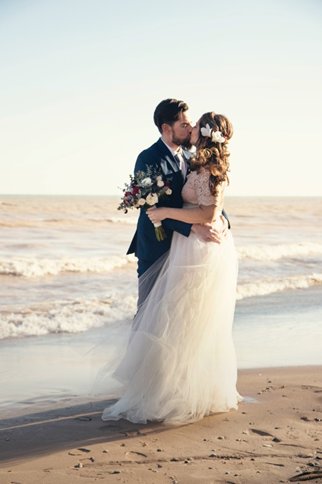 When you choose a UK Wedding Celebrant, they will work with you to design and deliver a totally bespoke, personal ceremony which reflects your personality and is filled with love and laughter. There are no restrictions as to where or when the ceremony is held (other than what the owners will allow). In addition, there are no restrictions on the content and is totally dependent on what the venue will allow rather than the individual views of the couple.
A wedding celebrant will provide options on readings, poems, music, hymns and vows if required. They will often provide you with a script to approve before the big day as well as a keepsake copy of the ceremony to cherish forever.
Many wedding celebrants offer ideas on ways to personalise your wedding by incorporating “mini ceremonies” and including family members – you are only limited by your imagination!
In addition, a wedding celebrant will provide a dress rehearsal to ensure all goes smoothly on the day.
Prices for a Wedding Celebrant start at £450.
What are the top 3 benefits of choosing a wedding celebrant to officiate at your wedding ceremony?
More choice over venue for your wedding ceremony
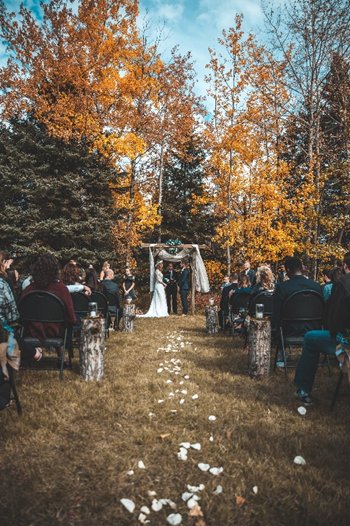 Couples now have a better choice of “tying the knot” at a wider range of places and not just licensed venues. You are not restricted to the licenced room at the wedding venue, you could have the ceremony anywhere, in any room or even an outdoor venue, garden, in your favourite woodland or even a hot air balloon!
Increase flexibility over dates
Often if you are having a registrar conduct the ceremony, you may be restricted by their availability and the dates you can get married. By separating out the legal aspect of your marriage and the ceremony, you have increased flexibility on your dates.
Many couples get legally married first at a register office and have a quick legal ceremony. You can then choose to have a personalised wedding ceremony on the date you have chosen and are not reliant on the registrar who is likely to be busy especially on those key wedding days and times!
More choice over content of your ceremony
I’m sure you would agree that the ceremony is the most important part of the wedding day. Couples can now make the ceremony as individual as they are, it can be totally bespoke and reflects your personalities.
If you opt for a civil ceremony you won’t be allowed to include any content that’s related to religion, such as hymns (even as quotes), Bible references, or even songs that indirectly refer to religion. Registry ceremonies tend to be quite quick and will have restrictions on readings, music, vows and sometimes even photographs. In some cases, churches will not allow photos to be taken during the ceremony, or they restrict the photographer’s access.
Some couples may not be overly religious but may want a more traditional feel to the ceremony vows by having a hymn, blessing or a reading from the bible.
 Other couples may want a totally modern ceremony which has no reference to god and religion but is more spiritual in its content.
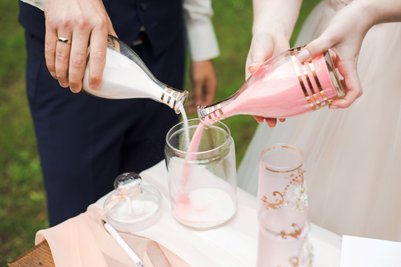
Using a wedding celebrant, you can also include “mini” ceremonies which personalise your ceremony. These include:
- Handfasting
- Sand ceremony
- Unity Candle
- Jumping the Broom
- Oathing Stone
Your wedding celebrant may also discuss with you including children, parents or even pets!
You day, your way!
By working with a wedding celebrant there is a way to have exactly the ceremony you want. Many couples don’t know about wedding celebrants in the UK, but they have been around for over 40 years.
Using a Wedding Celebrant allows you all the flexibility you require.
You will be able to have your wedding wherever you choose. It’s entirely up to you how the ceremony reflects your personal beliefs and personality. You will choose your own vows, readings, poems, music, decor and anything else you fancy, the sky’s the limit!